Supplier Intelligence: The Information Problem Behind Every Software Decision
Most software sourcing decisions are made with a fraction of the information they need. The supplier's full portfolio, their security posture, and who they compete with — none of it surfaces automatically. This post maps the gaps and what happens when they close.
A sourcing manager gets a purchase request. They visit the supplier's website. They talk to a sales rep. Maybe they send a security questionnaire and wait two weeks for a response. Then they make a decision.
The problem with that sequence is not the process. It's what's missing from it. The website shows one product. The sales rep talks about one use case. The security questionnaire, if it comes back at all, covers what the supplier chose to share. By the time a decision is made, the sourcing team has a narrow picture of a company they're about to trust with budget, data, and in many cases, internal systems.
This is not an edge case. SaaS tool counts grew 23% year over year, according to Spendflo's 2025 State of SaaS Procurement report. The supplier landscape is getting more complex, faster. And 56% of procurement professionals already name managing complex supplier networks as their single biggest challenge. (Intentful.ai, 2024 Procurement Pain Point Survey) The information problem is not getting smaller.
What is supplier intelligence in procurement?
Supplier intelligence in procurement is the structured collection and analysis of information about a software supplier before and during engagement. It covers four areas: the supplier's full product portfolio, the software categories in which they compete, their security and compliance posture, and alternative suppliers operating in their space.
For sourcing managers, this is the difference between evaluating a product and evaluating a supplier. For category managers, it's the difference between knowing what you bought and knowing what your supplier actually covers.
The four reasons software supplier evaluation goes wrong
1. You're evaluating the product, not the supplier
A purchase request arrives, and evaluation of the product in scope begins immediately. Features, pricing, integrations. The rest of the supplier's portfolio rarely comes into play.
That's a problem because software suppliers are rarely single-product companies. A supplier competing in project management also competes in documentation, analytics, and service management. Buying one tool without understanding what else they offer may mean you're adding a new vendor relationship to handle a need your existing suppliers already cover.
This is one of the root causes of software sprawl, something covered in depth in Application Rationalization: The Stack You Own vs. The Stack You Actually Use. The redundancy problem starts earlier than most teams realize, at the evaluation stage, before anything is bought. Sourcing teams without a full portfolio view of their suppliers are making decisions without a complete picture.
Supplier evaluation should begin with the supplier, not just the product. Understanding what a vendor offers across their full portfolio, not just the tool in scope, is the foundation of strategic sourcing.
2. Category coverage stays invisible
Category managers building software strategies know what they bought from a supplier. They rarely know which adjacent categories the supplier competes in.
This creates two failures. The first is duplicate purchasing: a new tool gets bought from a new supplier in a category that an existing supplier already covers. The second is a missed consolidation opportunity: a renewal conversation happens without any view of whether the existing supplier could absorb additional scope.
The financial consequences are real. Companies overpay for software by an average of 30%. (Tropic) Fragmented supplier visibility is a contributing factor. You can't consolidate what you haven't mapped.
Category management in software procurement requires a supplier-level view, not just a product-level view. This connects directly to the strategy work covered in Category Management: Why and Where Teams Get It Wrong. A category strategy built without visibility into what each supplier actually covers is built on incomplete ground.
Category managers should map each software supplier to the categories they compete in, not just the products currently in use. That view is what makes vendor consolidation decisions defensible rather than arbitrary.
3. Security posture is assembled manually and inconsistently
When procurement needs to understand a software supplier's security and compliance position, they typically send a questionnaire and wait. Some suppliers respond quickly. Many don't. The information that comes back is self-reported, unverified, and formatted differently every time.
77% of security and procurement teams cite compliance with standards like SOC 2, ISO 27001, and NIST as their top requirement when evaluating software suppliers. (ISC2 Supply Chain Risk Survey, 2025) But requiring something and having a reliable way to surface it are two different things. Nearly 70% of third-party risk management programs are understaffed, and organizations actively assess only about 40% of their vendor population as a result. (Mitratech, 2025 Third-Party Risk Management Study)
The gap between what teams require and what they actually check is a financial exposure. 30% of all data breaches in 2024 involved a third-party vendor, double the rate from the prior year. (Verizon Data Breach Investigations Report, 2025) The average cost of a supply-chain breach was $4.91 million. (IBM Cost of a Data Breach, 2025) Inconsistent due diligence is not a process inconvenience. It's a risk with a dollar figure attached.
Security due diligence on software suppliers should be structured and consistent, not ad hoc. SOC 2 status, ISO 27001 certification, encryption standards, and data handling practices should be accessible at the point of evaluation, not gathered after a supplier is already shortlisted.
4. Alternative suppliers are identified too late
When a renewal approaches or a consolidation decision is being considered, sourcing managers need to know who else competes in a supplier's space. In practice, this means manual web research, sales outreach, or analyst reports. None of these are fast, and none produce a structured, comparable output.
The result is weak negotiating leverage at exactly the moment leverage matters most. 40% of finance leaders say they struggle to negotiate better terms, even after evaluating alternatives. (Spendflo, State of SaaS Procurement 2025) The alternative research is shallow, so the negotiating position is weak.
The timing failure compounds this. 30% of procurement leaders missed SaaS renewal alerts entirely, resulting in auto-renewals on terms set by the supplier. (Spendflo, 2025) When alternatives haven't been identified in advance, a missed renewal window means automatic lock-in.
Alternative supplier identification is not a last-minute exercise. It belongs at the start of a supplier relationship, not at the end of a contract term. How those alternatives feed into vendor consolidation and product comparison decisions will be covered in the posts on Vendor Consolidation and Product Comparison later in this series.
Knowing who competes in a supplier's space, before entering a renewal or a consolidation decision, changes the negotiating position entirely. That research needs to happen before the renewal window opens, not during it.
Know Every Supplier Before You Engage
Teem provides a complete picture of each supplier — their products, capabilities, security posture, and competitors — so you can evaluate vendors quickly and confidently.
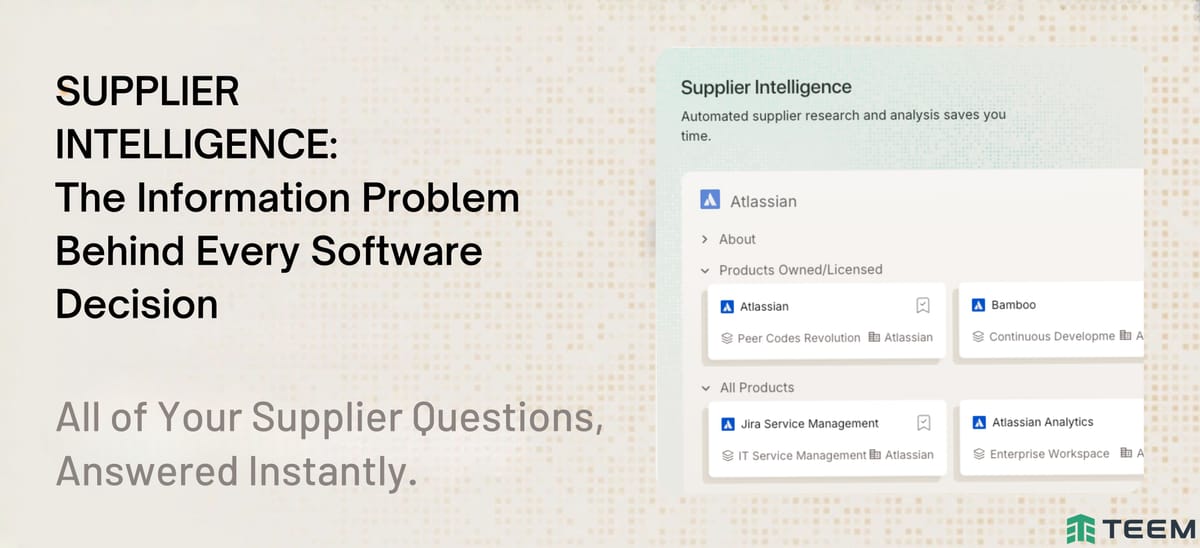
Most supplier intelligence work in procurement is manual, fragmented, and slow. Teem structures it into four areas of visibility, pulled in real time from supplier websites, demos, and public data sources. All of Your Supplier Questions, Answered Instantly.
1. Products
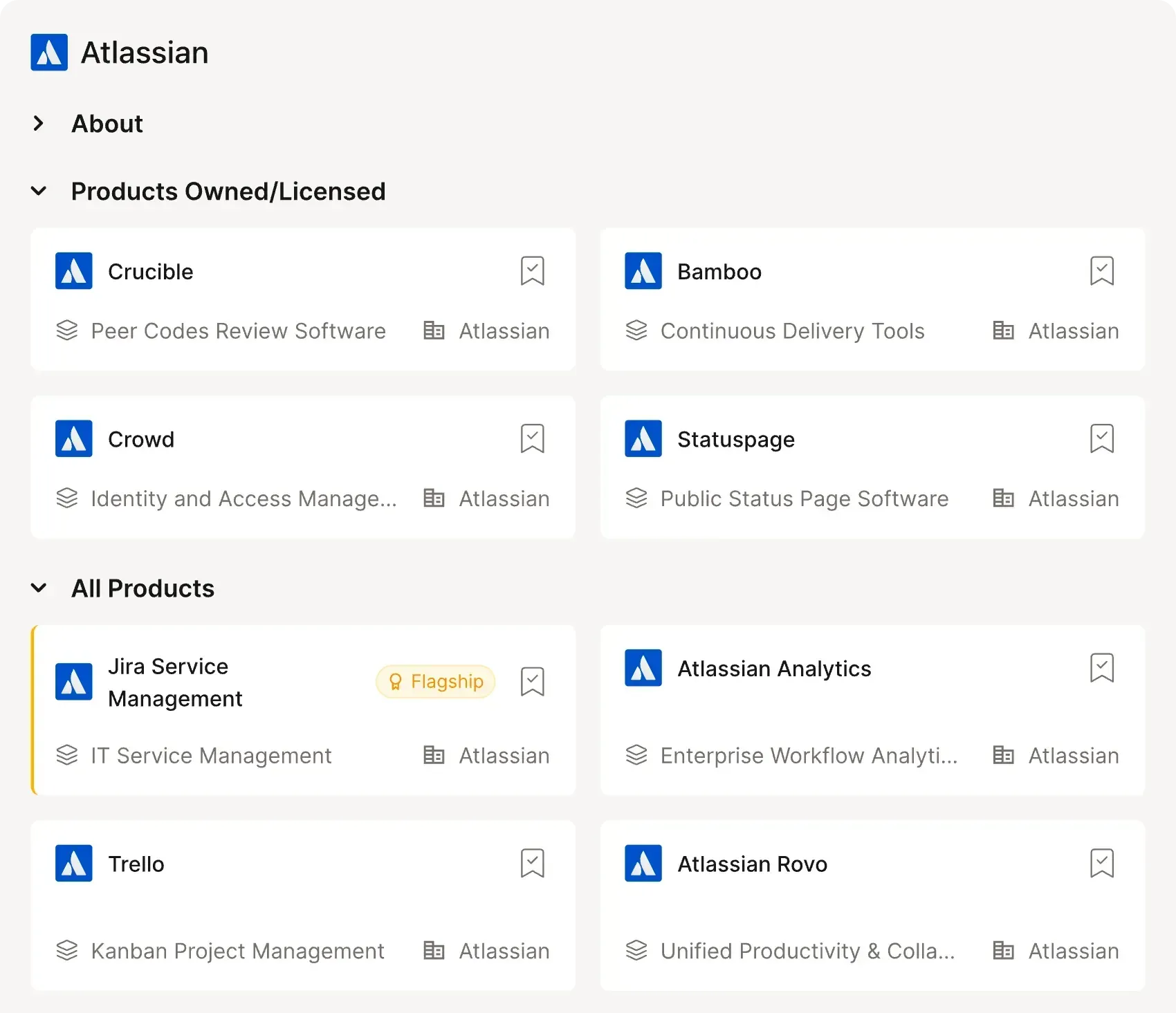
Teem surfaces every product a supplier owns or licenses, with flagship products flagged and each product mapped to its software category. Sourcing managers see what they're actually buying from, not just what they're buying. A supplier's full product portfolio is visible before any evaluation conversation starts.
2. Categories
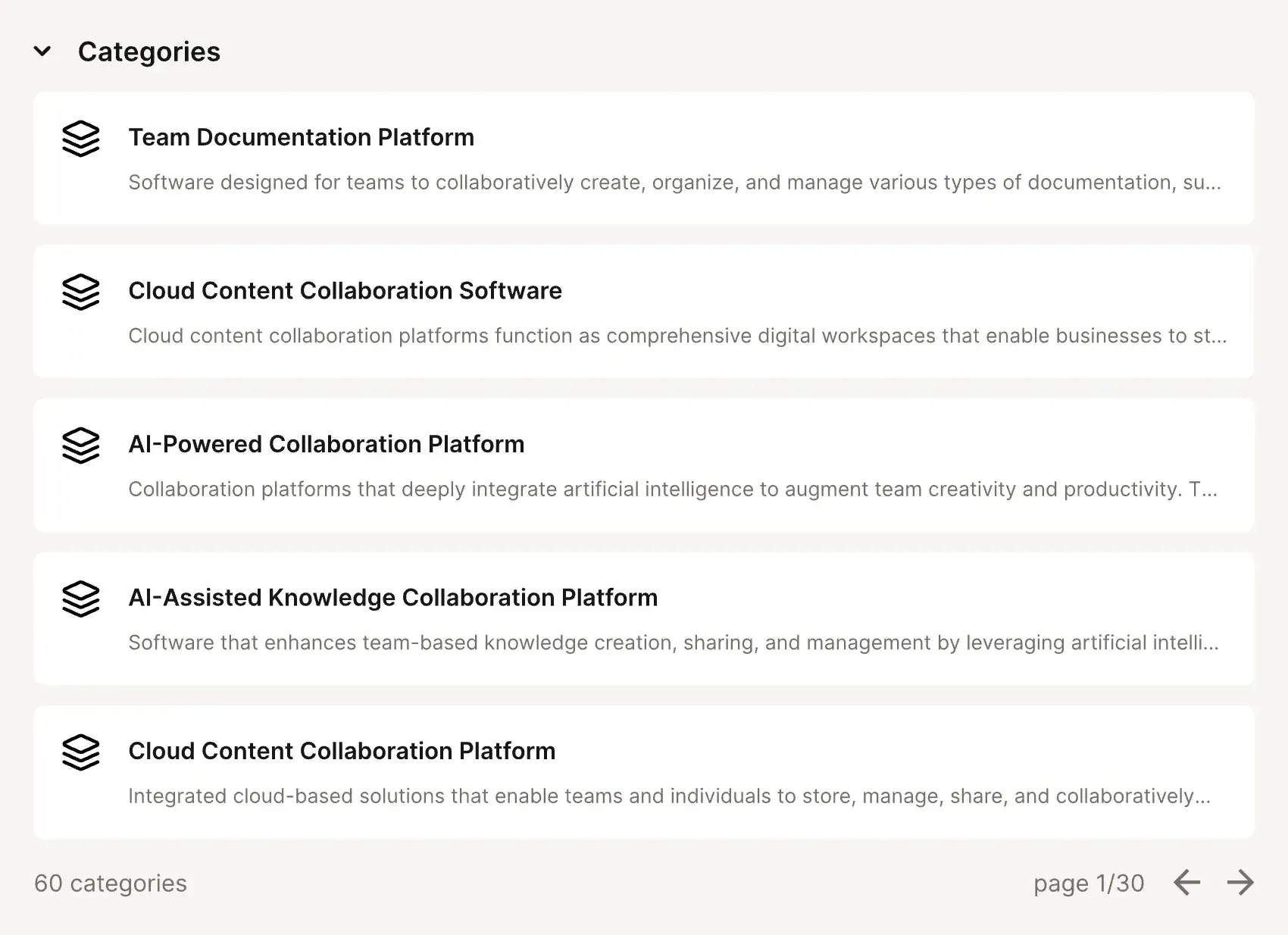
Teem maps each supplier to every software category in which they compete. A supplier might appear in 5 categories or 60. Category managers see the full competitive footprint of a supplier, which is the starting point for any consolidation or rationalization conversation. This view connects directly to the category strategy work covered in Category Management: Why and Where Teams Get It Wrong — knowing what a supplier covers across categories is what makes that strategy actionable at the supplier level.
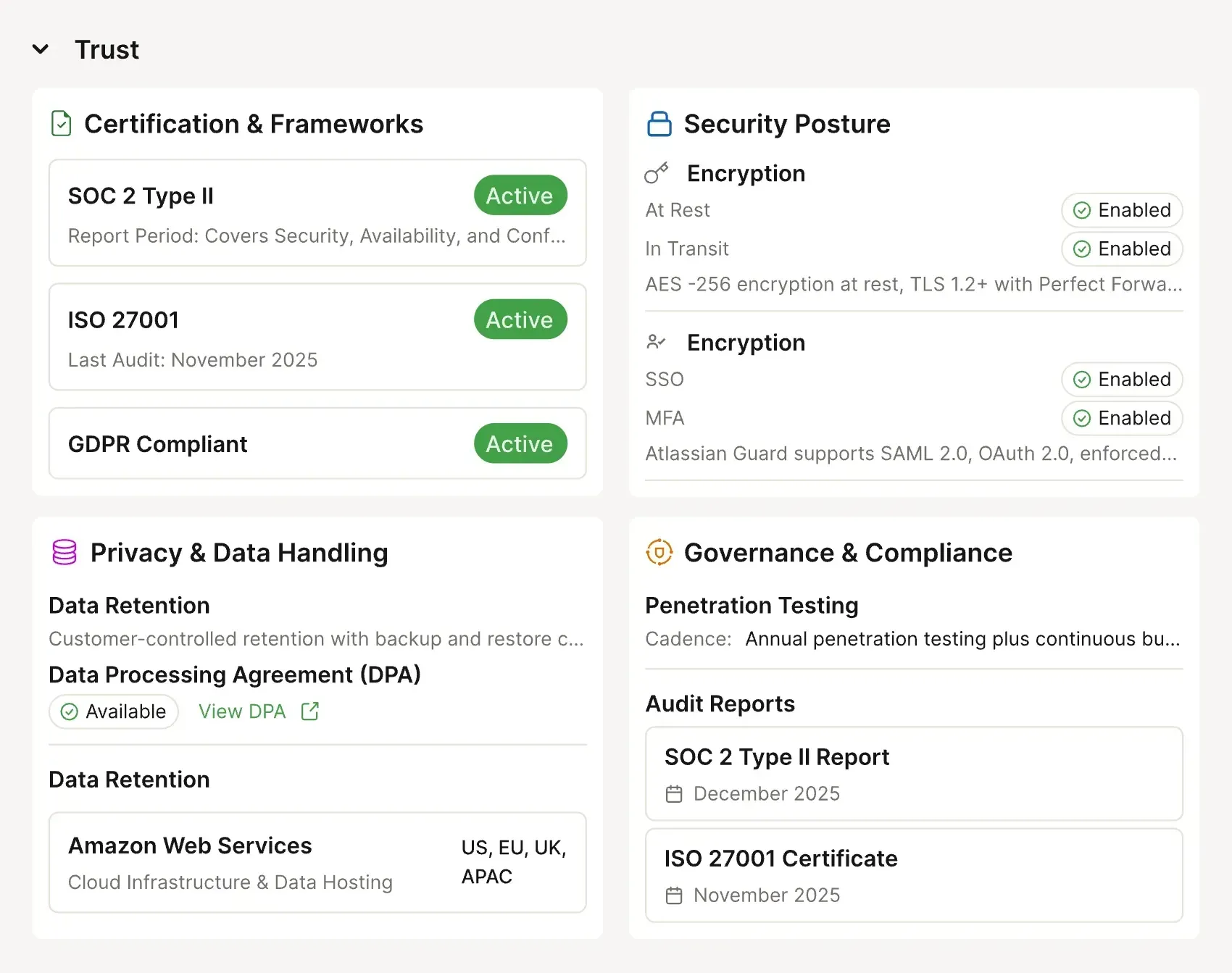
3. Trust
Teem pulls the supplier's security and compliance profile into one place. Certifications including SOC 2 Type II, ISO 27001, and GDPR status; encryption at rest and in transit; MFA and SSO; data processing agreements; hosting regions; and audit reports with dates. What used to require a questionnaire, a two-week wait, and a manually assembled summary is accessible without any of that.
4. Similar Suppliers
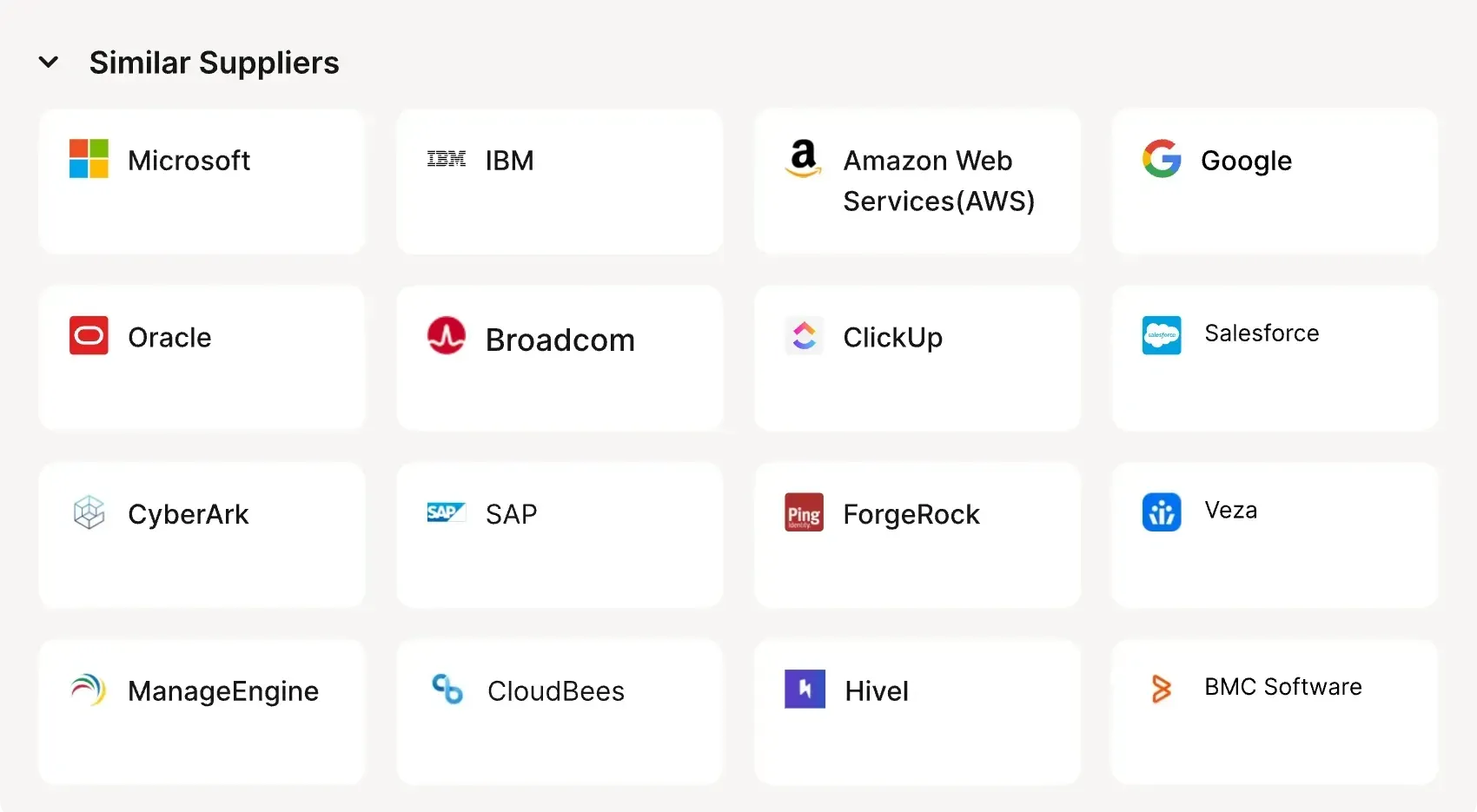
Teem surfaces the competitive alternatives to any supplier in the system. For sourcing managers approaching a renewal or a consolidation decision, this is the list that should exist before negotiations start, not after they stall.
The software supplier evaluation gap is a choice at this point
Software procurement has an information problem. Not a supplier problem, not a budget problem. The suppliers exist. The data exists. The issue is that collecting it takes too long and costs too much, so most teams settle for a partial picture and move on.
The sourcing manager who evaluates a product without knowing the supplier's full portfolio, the category manager who misses a consolidation opportunity because they didn't know a supplier already competed in that space, the team that auto-renews because they ran out of time to identify alternatives: none of these are failures of skill. They're failures of access.
Good supplier decisions don't require more time. They require better information, earlier.
See what your supplier landscape actually looks like. → With Teem
Frequently Asked Questions
What is supplier intelligence in procurement?
Supplier intelligence in procurement is structured visibility into a software supplier covering their full product portfolio, the categories they compete in, their security and compliance posture, and their competitive alternatives. It gives sourcing and category managers a complete picture of who they're engaging with, not just what they're buying.
Why is software supplier evaluation harder than evaluating other types of suppliers?
Software suppliers typically offer multiple products across multiple categories, and their risk profile includes technical controls such as encryption, certifications like SOC 2 and ISO 27001, and data-handling practices that require specific expertise to assess. Traditional supplier evaluation focuses on quality, delivery, and price. Software evaluation requires a broader view of the supplier's full capabilities and security posture.
What security certifications and controls should procurement check when evaluating a SaaS supplier?
SOC 2 Type II and ISO 27001 are the two most widely required certifications. Beyond those, procurement should check encryption at rest and in transit, MFA and SSO support, data processing agreements, hosting regions, and the cadence of penetration testing and audit reports. These are the controls that tell you how a supplier actually handles data, not just what they claim on a product page.
How do you identify alternative software suppliers before a renewal?
The most reliable approach is to map each supplier's category coverage and identify who else competes in those categories at the start of the supplier relationship. Having pre-identified alternatives creates negotiating leverage during renewals. Finding alternatives after a renewal window has passed typically means accepting existing terms.
What is the difference between supplier intelligence and supplier risk management?
Supplier risk management focuses on monitoring and mitigating risks in existing supplier relationships. Supplier intelligence is broader and more proactive: it covers what a supplier offers, where they compete, how they handle security, and the alternatives. Risk management uses the output of supplier intelligence, but it is not the same discipline.
How does supplier intelligence connect to vendor consolidation?
Vendor consolidation decisions require knowing what each supplier covers across products and categories. Without that view, consolidation is based on incomplete information and produces decisions that are hard to defend. Supplier intelligence is the data foundation that enables consolidation. The next posts in this series on Vendor Consolidation and Product Comparison cover what comes after that foundation is in place.