Vendor Consolidation: Untangling Your Supplier Ecosystem
Most organizations know they have too many vendors. The problem is not awareness. It is execution. Consolidation needs visibility, capability data, and governance to stick. Most initiatives get one right. Few get all three.
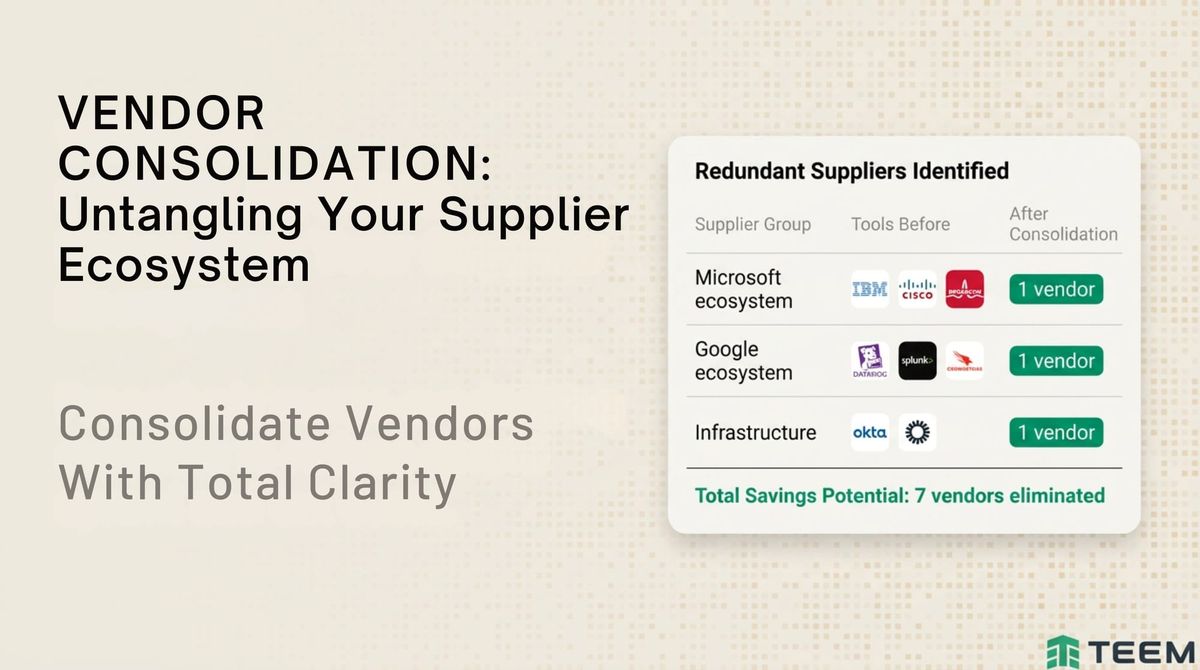
Most organizations know they have too many vendors. They have known it for a while. The problem is not awareness. It is execution.
SaaS spend has grown from 13% to 21% of total technology budgets between 2019 and 2024. (BCG, via CIO Dive, October 2025) Software licensing and subscription costs on renewals and new contracts rose by more than 10% for nearly half of organizations in the past year alone. (West Monroe survey, via CIO Dive, October 2025) The market is not slowing down, and neither is the buying. The average enterprise now runs over 300 SaaS applications. Larger organizations exceed 600. Roughly 40% of those applications are redundant or underutilized. (Productiv, State of SaaS Sprawl)
Despite that pressure, 68% of technology leaders say they plan to consolidate vendors, with most targeting a 20% reduction in vendor count. (CIO Research, via Gatekeeper, January 2026) The intent is not the problem. The gap between intent and execution is.
Consolidation is harder to deliver than it looks. It requires knowing what the organization actually owns before a single vendor conversation starts. It requires feature-level data to decide which supplier survives when two overlap. And it requires a structure that prevents the same sprawl from quietly rebuilding after the cleanup is done. Most initiatives get one of those three things right. Few get all three.
This post covers what actually gets in the way, how teams typically approach it wrong, and what it takes to build a supplier ecosystem that holds together past the first audit cycle.
What Is Vendor Consolidation In Procurement?
Vendor consolidation in procurement is the process of reducing an organization's supplier base by identifying overlap, eliminating redundant tools, and concentrating spend with a smaller group of capable vendors. In enterprise software, this means rationalizing a SaaS portfolio that has grown through decentralized purchasing across departments — removing duplication, standardizing on the strongest solutions, and building a supplier ecosystem that is cheaper to run and easier to govern.
Done with the right data behind it, the outcomes are real: lower licensing costs, stronger negotiating position, reduced administrative overhead. Done without that foundation, consolidation often cuts the wrong tools, stalls in cross-functional disagreement, or delivers short-term savings that quietly erode as sprawl rebuilds.
Three Reasons Vendor Consolidation Stays Stuck
1. You cannot consolidate what you cannot see
The root cause of vendor sprawl is not reckless purchasing. It is decentralized purchasing. Departments adopt tools independently, solving urgent problems without checking whether the rest of the organization already runs them. Finance picks a reporting platform. Engineering adds a monitoring tool. Marketing brings in a data provider. Each decision is justified. Together, they build a portfolio that no single person or team can fully account for.
The scale is significant. The average enterprise runs over 300 SaaS applications, with larger organizations exceeding 600. Approximately 40% of those applications are redundant or underutilized. (Productiv, State of SaaS Sprawl) The pace of accumulation makes this harder over time: the average organization adds nine net-new applications per month, contributing to 34% annual portfolio growth — with 46% of licenses going unused. (Zylo, SaaS Procurement Guide, January 2026)
Gartner has put a cost figure on the visibility gap. Organizations that fail to achieve centralized visibility and coordinate SaaS life cycles will overspend on SaaS by at least 25% through 2027, due to unused entitlements and unnecessary overlapping tools. (Gartner, 2025 Magic Quadrant for SaaS Management Platforms). 68% of technology leaders say they plan to consolidate vendors, with most targeting a 20% reduction in vendor count. (CIO Research, via Gatekeeper, January 2026)
You cannot build a consolidation strategy on top of an incomplete picture. The inventory problem has to come first.
Best practice: Before identifying consolidation targets, build a complete view of what the organization actually runs — not what IT approved, not what procurement recorded, but every tool actively deployed across departments. Map products to vendors, vendors to categories, and categories to the functions they cover.
2. Decisions Get Made Without Capability Data
Once teams identify that consolidation is needed, the decision problem kicks in. Choosing which vendor stays requires answering a specific question: which tool actually covers more of what the organization needs? In most cases, that question is answered through vendor demos, analyst reports, and stakeholder preferences—not through a structured assessment of functional coverage.
The consequences show up in two ways. Teams consolidate to the wrong vendor, cutting the tool that covered more capabilities than the one that survived. Or they cannot reach a decision at all — each department defends its preferred tool, there is no shared basis for comparison, and the initiative drags on without resolution.
The same data gap shows up at renewal time. According to Spendflo's 2025 State of SaaS Procurement report, 45% of finance leaders cite vendor price hikes as their biggest renewal pain point, while 40% say they struggle to negotiate better terms despite evaluating alternatives. (Spendflo, State of SaaS Procurement 2025, via Spend Matters) Without feature-level evidence, there is nothing to push back with. The vendor knows switching costs are high and prices accordingly.
Best practice: Effective vendor comparison requires feature-level assessment across suppliers in the same category — not demo impressions or G2 ratings. The comparison should cover functional coverage, integration depth, contract terms, and total cost of ownership before any decision is made about which vendor to standardize on.
3. The Stack Grows Back After Every Cleanup
Even when a consolidation effort succeeds, sprawl tends to rebuild. New tools arrive through department budgets. Auto-renewals extend contracts nobody reviewed. A team adopts a point solution without knowing that an existing vendor already covers the need. Within a year or two, the cycle restarts.
30% of finance leaders admit to missing renewal alerts altogether, resulting in auto-renewals and spend that should have been cut. (Spendflo, State of SaaS Procurement 2025, via Spend Matters) Most organizations treat software rationalization as a budget-cutting project triggered by financial pressure — the question becomes "what can we cut?" rather than "where do we have ongoing redundancy?" (Tropic, 2026 SaaS Procurement Trends, November 2025)
This is the same governance gap covered in the Application Rationalization post in this series. The conditions that allow redundant applications to accumulate are the same ones that allow a consolidated portfolio to fragment again over time.
Best practice: Treat vendor consolidation as a continuous discipline, not an annual audit. This means maintaining a live view of the stack, flagging new overlap as tools are added, and tracking renewals with enough lead time to assess and renegotiate — not just accept by default.
Consolidate Vendors With Total Clarity
Teem maps every product, supplier, and capability across your stack — revealing overlap and showing exactly where you can combine tools, standardize vendors, and reduce spend.
1. Identify Overlap Across Products and Suppliers
Teem automatically detects duplicate tools and similar vendors across your environment — making it easy to see where consolidation opportunities exist.
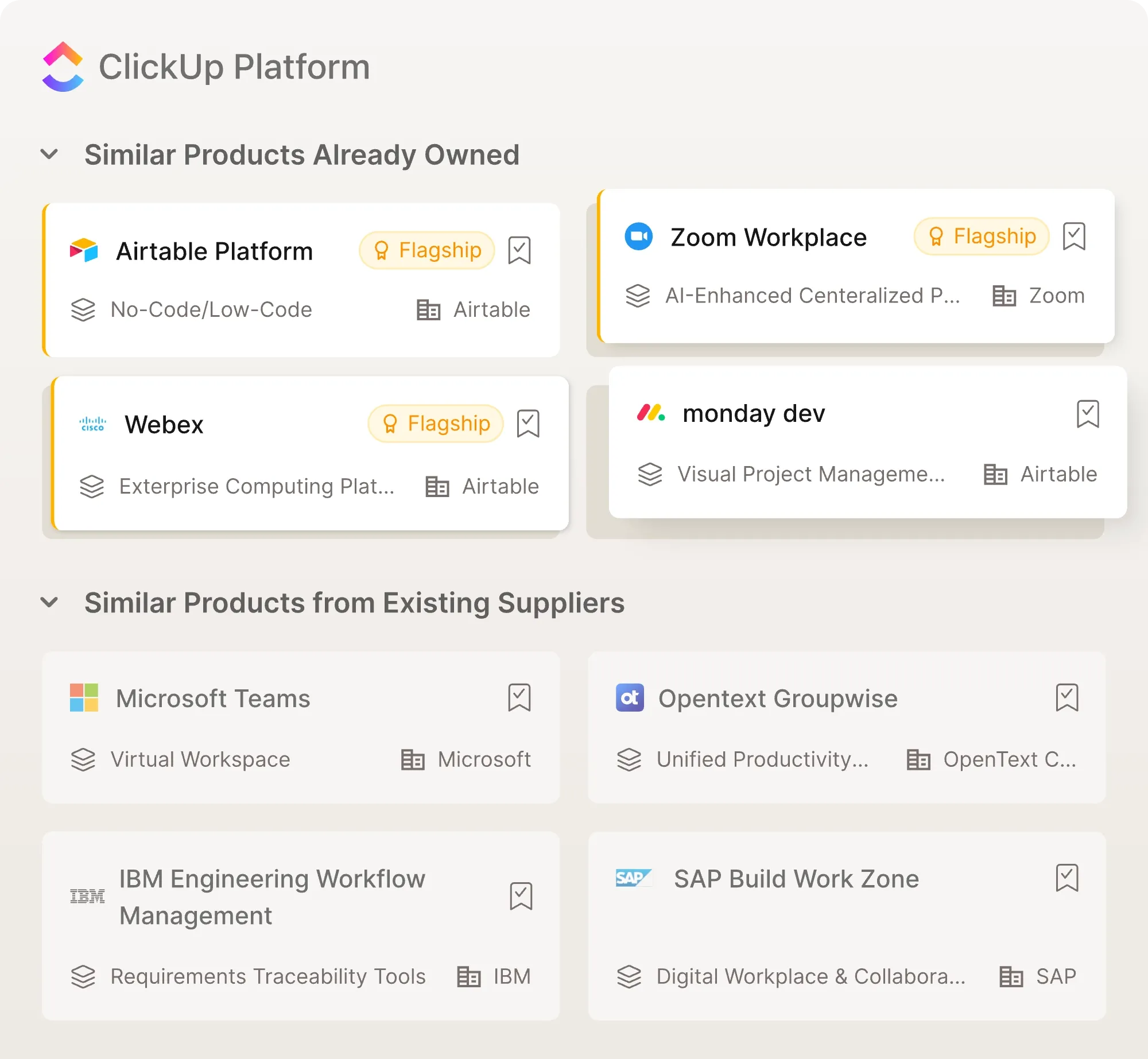
The visibility problem that blocks most consolidation efforts starts with not knowing what the organization actually owns. Teem auto-maps products to suppliers and surfaces where similar tools are running across departments or business units. Rather than relying on procurement records or manual audits — both of which tend to miss shadow IT and untracked subscriptions — the detection runs across the live environment. Overlap becomes visible before it compounds into a bigger problem.
This builds directly on the supplier intelligence work covered earlier in this series. Understanding which suppliers exist across the portfolio is a prerequisite for deciding which to retain.
2. Compare Vendors Side-by-Side to Choose the Best Fit
Feature-level comparisons highlight strengths, gaps, and coverage across suppliers so you can standardize on the most capable, cost-effective options.
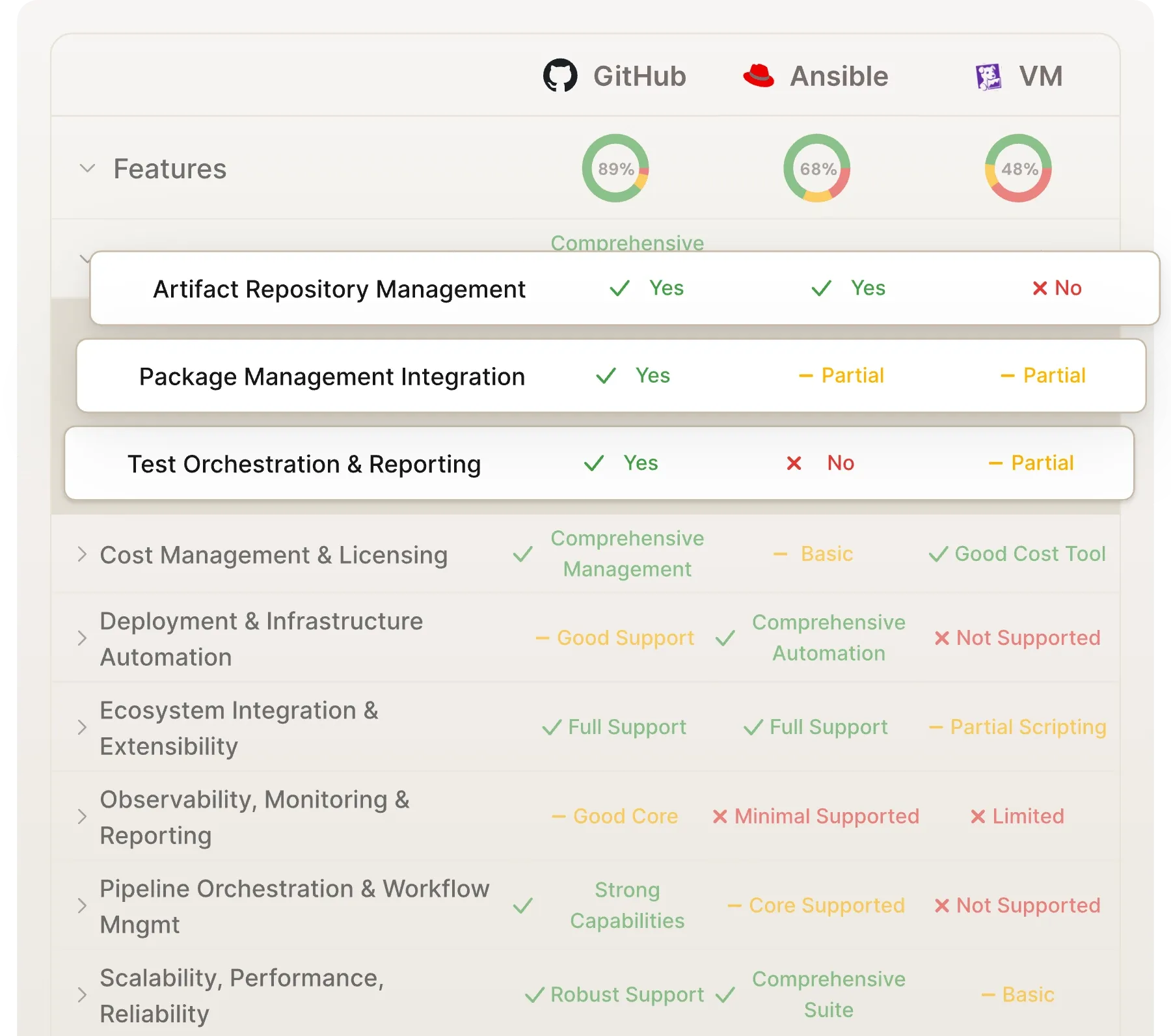
Identifying that two vendors overlap is only part of the problem. Deciding which one survives requires knowing what each actually covers — not what the vendor claims in a sales call, but a consistent, feature-level view across both tools. Teem surfaces this comparison across suppliers in the same category, giving procurement and IT the evidence to decide which vendor stays and build a case that holds up internally. This is also what gives teams leverage in renewal negotiations: a clear record of what each vendor covers, and what the alternatives look like.
3. Build a Clear, Data-Backed Consolidation Plan
Teem centralizes product data, contracts, usage, and capabilities into a single view — giving procurement and IT a defensible roadmap to reduce spend and simplify the stack.
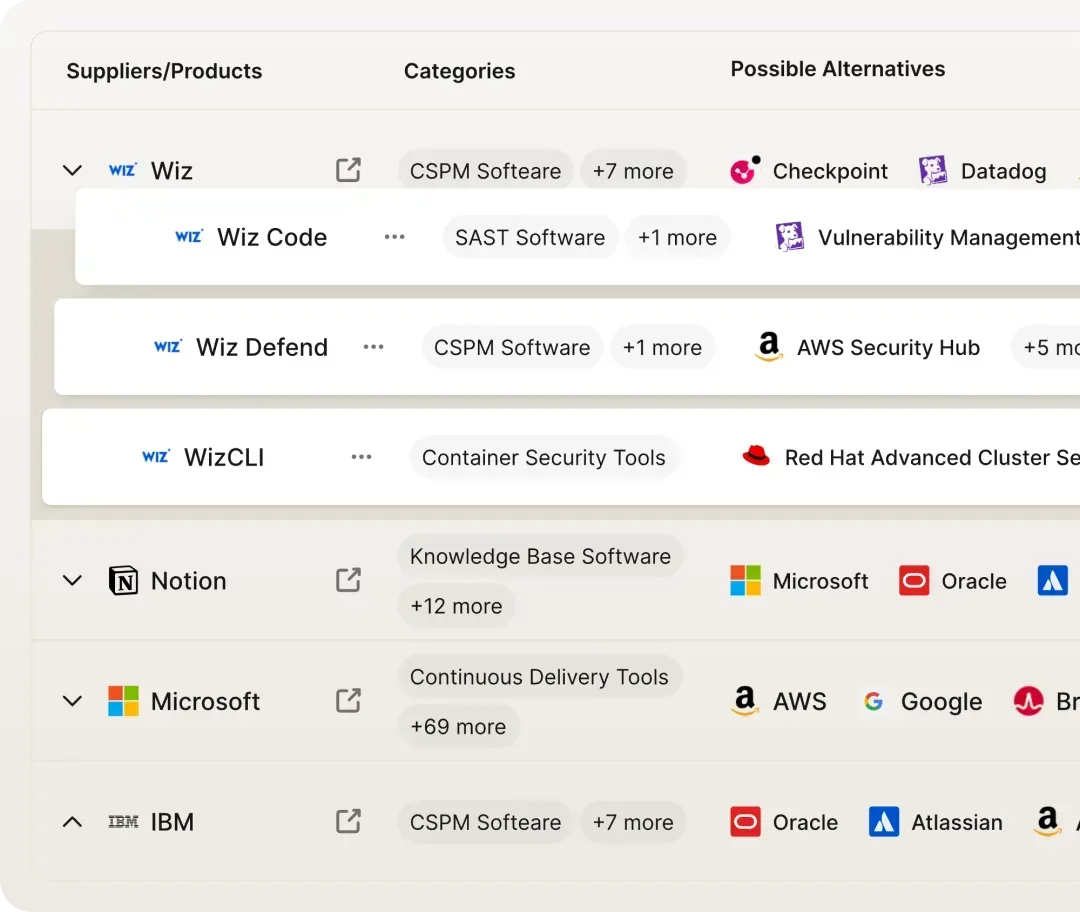
A consolidation plan without data behind it is a list of intentions. Teem pulls together contract terms, usage patterns, capability assessments, and supplier relationships into a single view — giving procurement the foundation to build a roadmap they can defend to finance and IT leadership. The plan is not a one-time output. It reflects the current state of the stack and updates as that state changes, which distinguishes consolidation as an ongoing discipline from a cleanup exercise.
This data foundation also feeds into business case development — covered later in this series — where procurement teams need to justify consolidation decisions with financial and operational evidence that executives can act on.
From Sprawl to a Stack You Can Manage
Vendor sprawl is not a procurement failure. It is what happens when software is easy to buy, and no one has a complete view of what is already running. Departments solve their own problems, contracts renew without review, and the portfolio grows faster than anyone can govern it.
The real consolidation problem is not vendor count. It has enough visibility to know what you own, enough data to choose what to keep, and enough structure to stop the same sprawl from rebuilding twelve months later.
Most organizations have the mandate to consolidate. What they are missing is the foundation that makes it stick.
See what your supplier ecosystem actually looks like. →With Teem
Frequently Asked Questions
What is vendor consolidation in procurement?
Vendor consolidation in procurement is the process of reducing an organization's supplier base by identifying and eliminating overlapping tools, then concentrating spend with fewer, more capable vendors. In enterprise software, it typically involves rationalizing a SaaS portfolio that grew through decentralized purchasing across departments and business units.
Why does vendor consolidation fail?
Most consolidation initiatives fail for one of three reasons: teams lack a complete inventory of what the organization actually runs; decisions about which vendor to keep get made without feature-level comparison data; or the consolidation succeeds initially but sprawl rebuilds without ongoing monitoring and governance in place.
How does vendor sprawl happen in enterprise software?
Vendor sprawl is the predictable result of decentralized SaaS purchasing. Departments adopt tools to address specific needs without checking whether the organization already owns them. Over time, those individual decisions accumulate into a portfolio that is expensive, redundant, and difficult to inventory from any single vantage point.
What does unmanaged SaaS sprawl actually cost?
Gartner estimates that organizations failing to achieve centralized visibility and coordinate SaaS life cycles will overspend on SaaS by at least 25% through 2027, due to unused entitlements and unnecessary overlapping tools. (Gartner, 2025 Magic Quadrant for SaaS Management Platforms)
What is the difference between vendor consolidation and application rationalization?
Application rationalization focuses on evaluating individual applications — assessing their business value and deciding whether to keep, replace, or retire each one. Vendor consolidation focuses on the supplier layer — identifying where multiple vendors serve the same function and reducing the base to fewer, more strategic relationships. The two processes overlap and often run together, but they address different levels of the stack.
How should teams compare vendors during a consolidation exercise?
Effective comparison requires feature-level assessment across vendors in the same category, not demo-based impressions or satisfaction scores. Teams should evaluate functional coverage, integration depth, contract terms, and total cost of ownership before deciding which vendor to standardize on. The comparison needs to be systematic enough to resolve internal disagreements with evidence rather than opinion.
How do you stop vendor sprawl from rebuilding after consolidation?
Prevention requires moving from periodic audits to continuous monitoring. This means maintaining a live view of the stack, flagging new overlap as tools are added, and tracking renewals far enough in advance to assess usage, negotiate terms, or consolidate — rather than accepting auto-renewal by default.